
Pasta Making Gadgets
Fresh pasta needs very little: flour, eggs and something to roll and cut the dough. What you buy depends on the pasta you want to make. Long ribbons need a roller, filled pasta needs a press or stamps, and shapes like gnocchi and cavatelli need a ridged board. This page collects pasta making tools sold on Amazon, from a hand-crank machine to a wooden gnocchi board.
Below is our short list, checked in September 2026 to make sure each tool is still listed on Amazon, with at least one tool for each job. After the full product grid you’ll find how the types compare and what to check before buying.
As an Amazon Associate we earn from qualifying purchases. Prices and availability change on Amazon, so check the current price there.
Our short list of pasta making tools

Marcato Atlas 150 Pasta Machine
The hand-crank roller most home cooks start with, made in Italy. It clamps to the counter, rolls sheets up to 150 mm wide and comes with a cutter for fettuccine and tagliolini.

Imperia Pasta Machine, Model 150
The other classic Italian roller. The listing gives six thickness settings from 0.5 to 5 mm, a 6.5 mm fettuccine cutter and a 2 mm tagliolini cutter, and a slot for an optional motor.

KitchenAid Pasta Sheet Roller Attachment
If you already own a KitchenAid stand mixer, this roller runs off the mixer’s hub, so both hands stay free to guide the dough. It rolls 6-inch sheets with 8 thickness settings and includes a cleaning brush.

Philips Compact Pasta and Noodle Maker
An extruder, not a roller: it mixes the dough and pushes it through a shaping disc. Philips lists 2 to 3 portions in about 18 minutes and ships it with spaghetti, penne and fettuccine discs.

Bellemain Ravioli Maker Press
A metal frame and press that fills and seals 12 square ravioli at once. Lay one sheet over the frame, add the filling, cover with a second sheet and roll over it.

TACGEA Ravioli Stamps with Cutter Wheel
Round, square and heart stamps with fluted edges plus a rolling cutter, all with wooden handles. Stamps suit small batches better than a 12-hole press.

La Gondola Festooned Pasta Wheel
A brass and wood wheel that cuts dough with a wavy edge, for pappardelle, lasagna sheets and closing ravioli by hand.
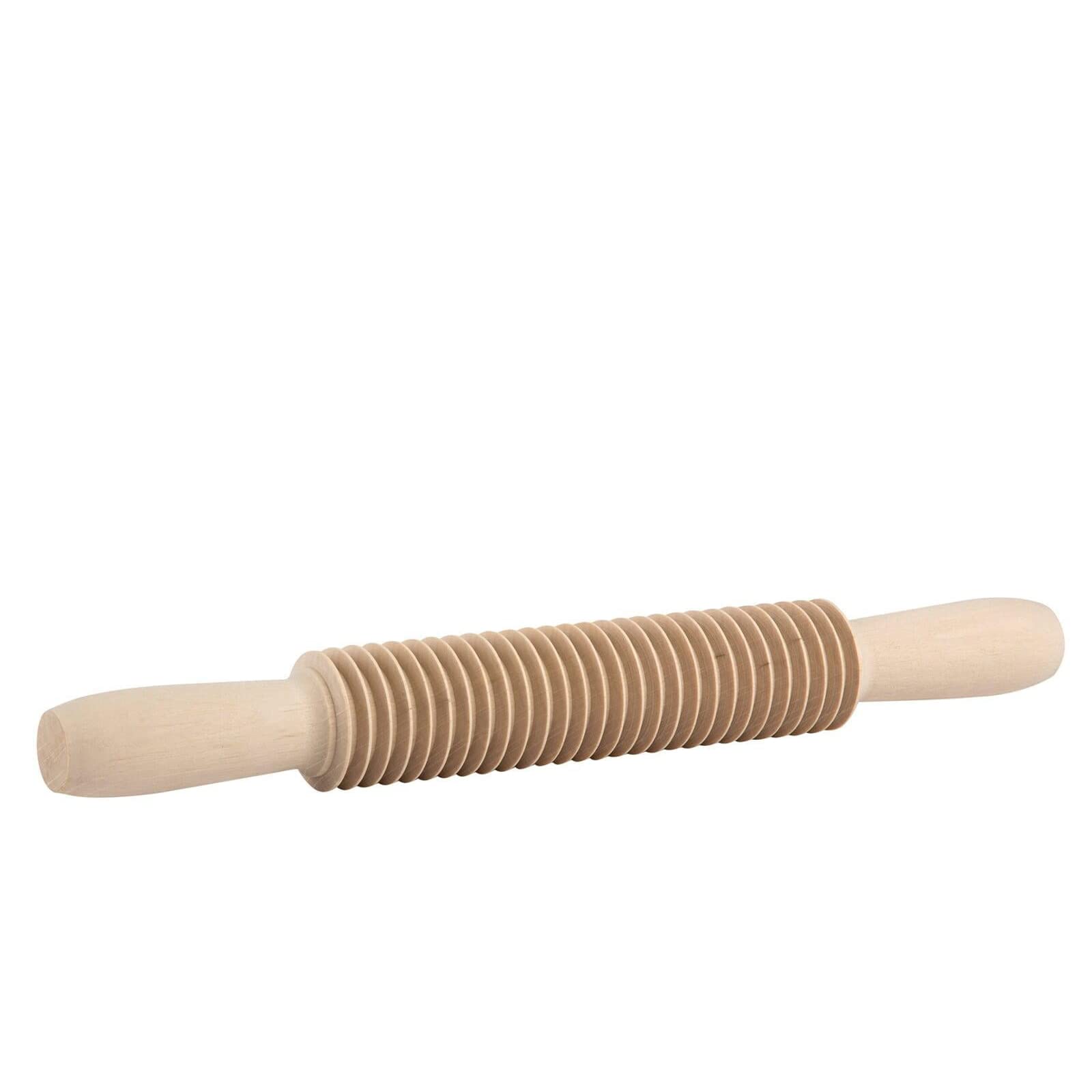
Küchenprofi Wooden Tagliatelle Cutter
A grooved beech roller made in Italy: run it over a rolled sheet and it marks out tagliatelle about 0.2 inch wide. Hand wash and towel dry.

Maveite Gnocchi Board with Garganelli Stick
A wooden ridged board, 11.2 by 3.2 inches, for gnocchi and cavatelli. The stick lets you roll garganelli on the same board.

Ourokhome Collapsible Pasta Drying Rack
Ten arms on rubber feet for hanging long pasta while it dries, and it folds flat for the drawer. The listing says it holds up to 4 lb of fresh noodles.

Pro Dough Stainless Steel Bench Scraper
For dividing dough, lifting sheets off the counter and scraping flour off the board afterwards. Stainless steel and dishwasher safe, with a measuring scale on the blade.
Showing 1–12 of 248 results




Which pasta maker should you get?
Hand-crank roller
A hand-crank roller is the right first pasta machine for most people. You feed the dough through two steel rollers, narrowing the gap one setting at a time until the sheet is as thin as you want, then swap to the cutter. It does sheets for lasagna and ravioli and ribbons like fettuccine. It needs a counter edge thick enough for the clamp, and it works best with two people or with one hand cranking and the other catching the sheet.
Stand mixer attachment
A mixer attachment does the same job as a hand-crank roller, but the motor turns the rollers. That frees both hands, which is the main reason people prefer it for long sheets. It only makes sense if you already own a compatible mixer. Check what's in the box: some sets are only the sheet roller, others add spaghetti and fettuccine cutters.
Electric extruder
An electric extruder mixes the dough and pushes it through a disc, so it can make tube shapes like penne that a roller can't. It also takes most of the work out of kneading. The trade-off is that you can't make sheets for lasagna or ravioli, and the discs need cleaning after every batch.
Hand tools for filled and shaped pasta
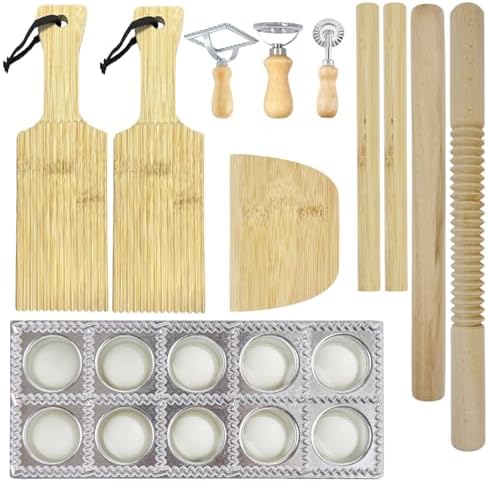
For ravioli, a press makes a full tray at once, while stamps give you any size and shape but go one piece at a time. A gnocchi board adds ridges that help the sauce stick, and the same board rolls cavatelli and garganelli. A wooden cutter or a fluted wheel is enough for tagliatelle or pappardelle if you roll the dough with a pin.
What to check before you buy
Thickness settings and sheet width
More settings give you more control, especially for the very thin sheets you want for ravioli. Sheet width matters too: 150 mm is the common size for home machines. A wider roller is only worth it if you make lasagna often.
How it attaches to the counter
Hand-crank machines clamp to the edge of a table or counter. Measure how thick your counter edge is before buying, because thick stone tops don't always fit the clamp. Some models also accept an optional motor.
Cleaning
Most pasta machines are not meant to go under the tap or in the dishwasher. Marcato and KitchenAid both say not to wash their rollers with water and to brush the dough off instead. Read the care line before you buy, and see our guide on how to clean a pasta maker for the steps for each type.
Drying and storing fresh pasta
A drying rack keeps long pasta from sticking together while it rests before cooking. Folding racks take less drawer space. Short shapes and ravioli dry better laid out flat on a floured tray.
Related guides
- How to clean a pasta maker: manual rollers, KitchenAid attachments and electric extruders.
- Essential tools for making homemade pasta.
- Bread making gadgets, for the rest of your dough projects.