
12 Bread Making Tools for Better Loaves at Home
Most homemade bread needs very few tools: a bowl, a scale, something to mix with and a hot oven. The bread making tools worth buying are the ones that fix a specific problem. A banneton holds the shape of a wet sourdough loaf, a lame lets the bread open where you want it to, a Dutch oven traps the steam a home oven lacks, and a proofing box keeps a cold kitchen from stalling the rise.
Below is our short list of 12. We visited every listing on amazon.com on October 19, 2026 and dropped the ones that could not be bought that day, which removed a white enameled Dutch oven and a digital kitchen scale. The list runs from two starter kits to single tools for each step of a loaf. After the full product grid you’ll find what each tool is for and what we’d leave out.
As an Amazon Associate we earn from qualifying purchases. Prices and availability change on Amazon, so check the current price there.
Our short list of bread making tools
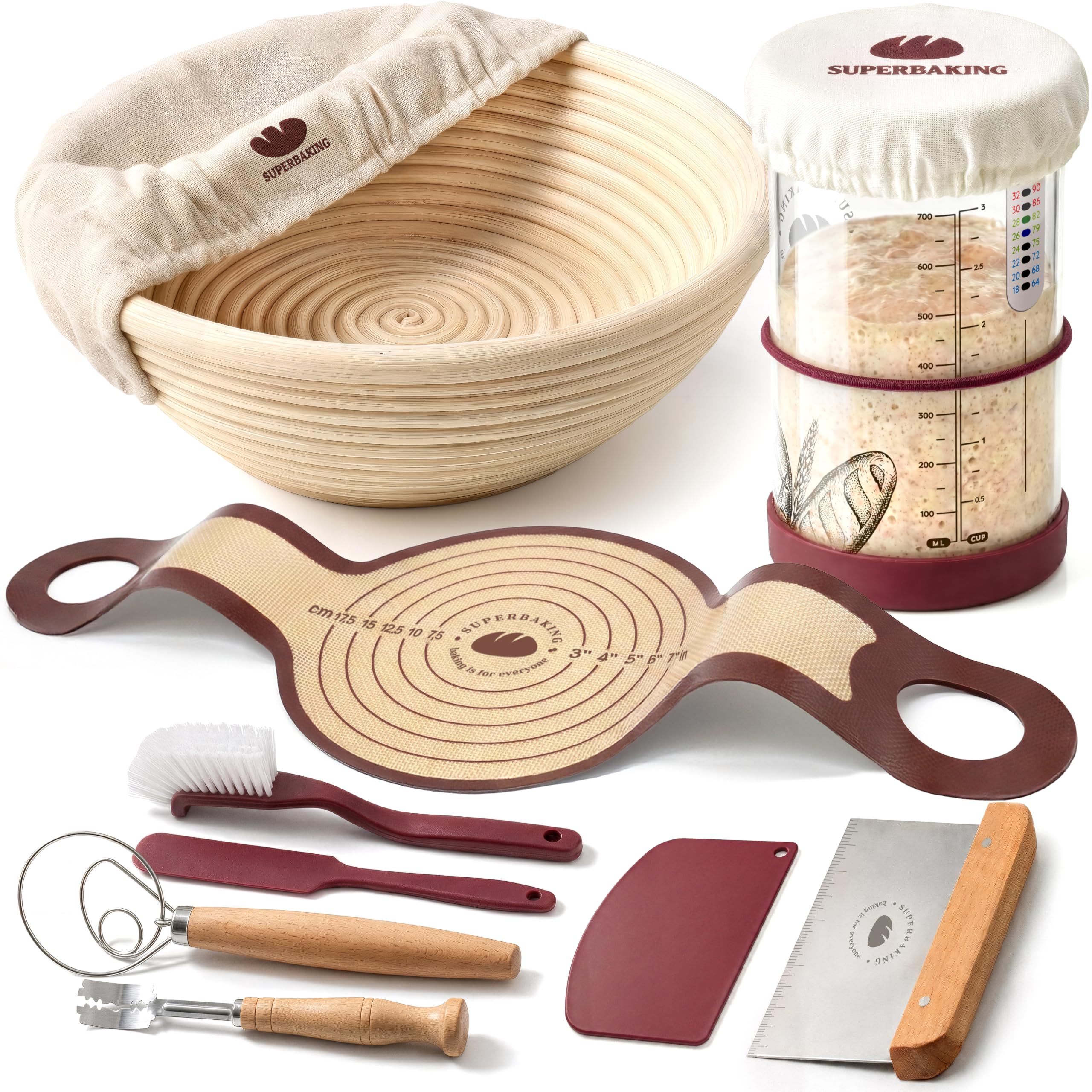
Superbaking Sourdough Starter Kit
A 9-inch rattan banneton, a jar for the starter, a silicone sling, a dough whisk and a lame in one box, with a printed guide that goes from feeding the starter to scoring. The basket is rated for loaves up to 1.5 pounds.

Complete Sourdough Starter Kit with 9-Inch Proofing Basket
Another all-in-one option built around a 24-ounce wide-mouth glass jar, which the seller says holds enough starter for two to four loaves. A rattan proofing basket, baking tools and a printed recipe book come with it.

Saint Germain Bakery 9-Inch Round Banneton with Liner
Handmade natural rattan without dye, from a small family business in Vietnam according to the listing. Nine inches fits a medium to large loaf. Cleaning is a shake to get the flour out, and a stiff brush once any stuck dough has dried.

Dimpola 9-Inch Banneton Baskets, Set of 2
Two round rattan baskets with cloth liners. Two baskets let you proof a pair of loaves at once, and the liner doubles as a cover while the dough rises.

Weck Tulip Jars, 1 Liter, Set of 2
Wide-mouth German glass jars with glass lids, sold for canning but popular as starter jars because the opening is easy to reach into and the straight glass shows how much the starter has risen. Dishwasher safe.

King Arthur Baking Company Baker’s Dough Whisk
A single-loop Danish-style whisk in 18/8 stainless steel with a sealed beechwood handle, about 13 inches long. The open loop moves through stiff dough without clogging, which a balloon whisk cannot do.
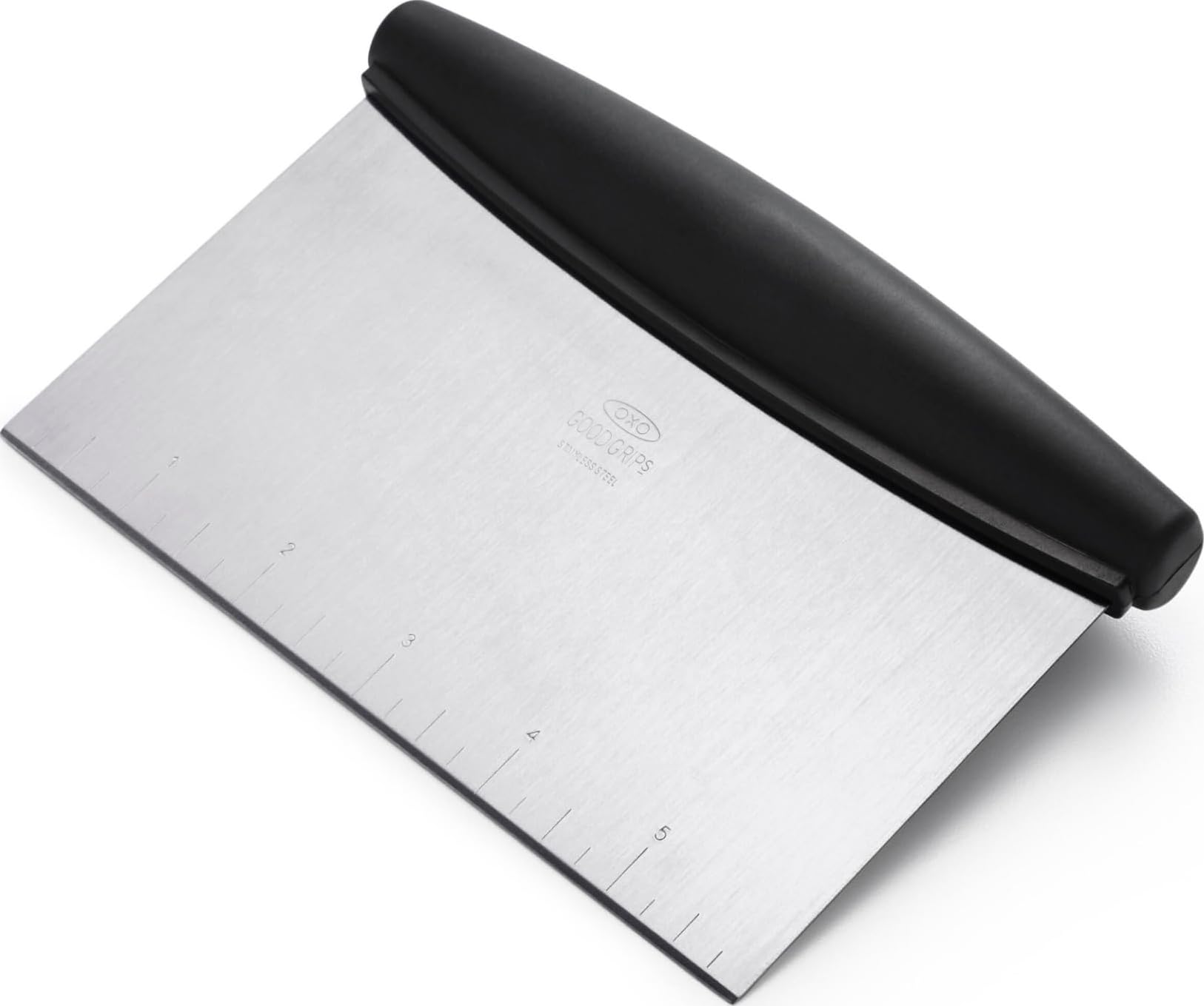
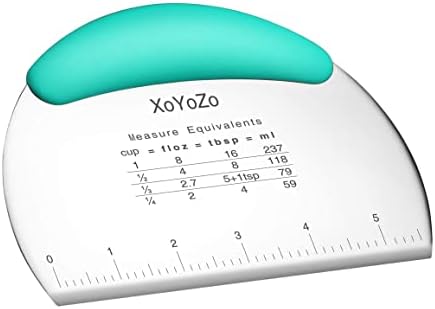
OXO Good Grips Multi-Purpose Scraper and Chopper
A stainless steel bench scraper with 1-inch markings along the blade, so you can divide dough evenly without a ruler. Non-slip handle, and it goes in the dishwasher.

SURDOCA Flexible Bowl Scrapers, 3 Pack
Three bendable scrapers, 4.7 by 3.7 inches, in BPA-free PE plastic. They follow the curve of a mixing bowl and get the last sticky bits of wet dough out, the job a rigid bench scraper does badly.

Saint Germain Bread Lame with Leather Cover
A wooden handle with a steel stick that holds standard razor blades. Ten blades are included, and the leather sleeve keeps the blade covered in the drawer.
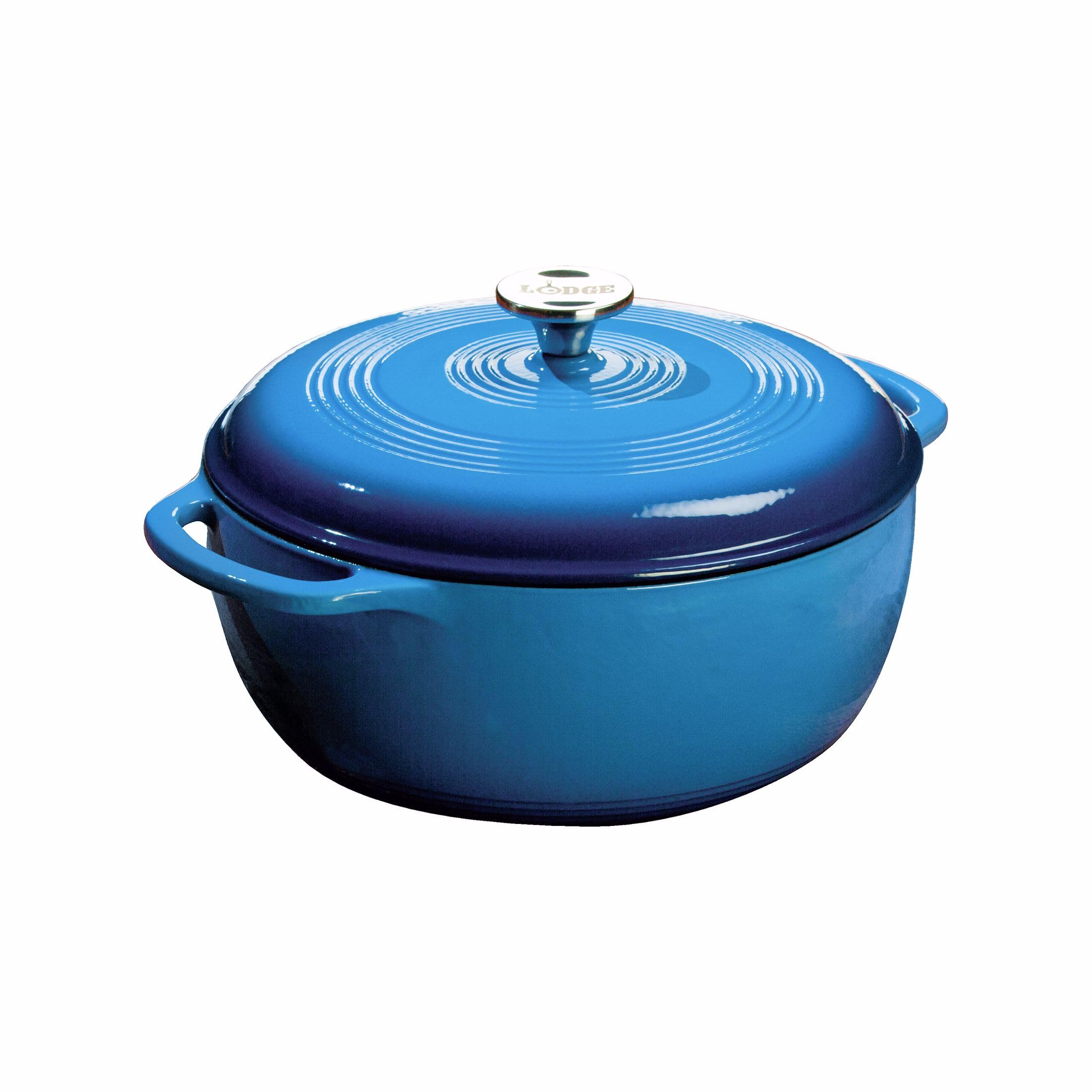
Lodge Essential Enamel Cast Iron Dutch Oven, 6 Quart
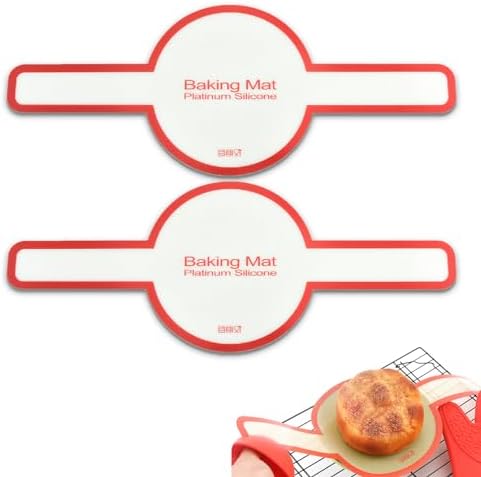
Enameled cast iron, oven safe to 500°F. Baking inside a covered pot traps steam around the loaf for the first part of the bake, which is how home bakers get an open crumb and a crackly crust.
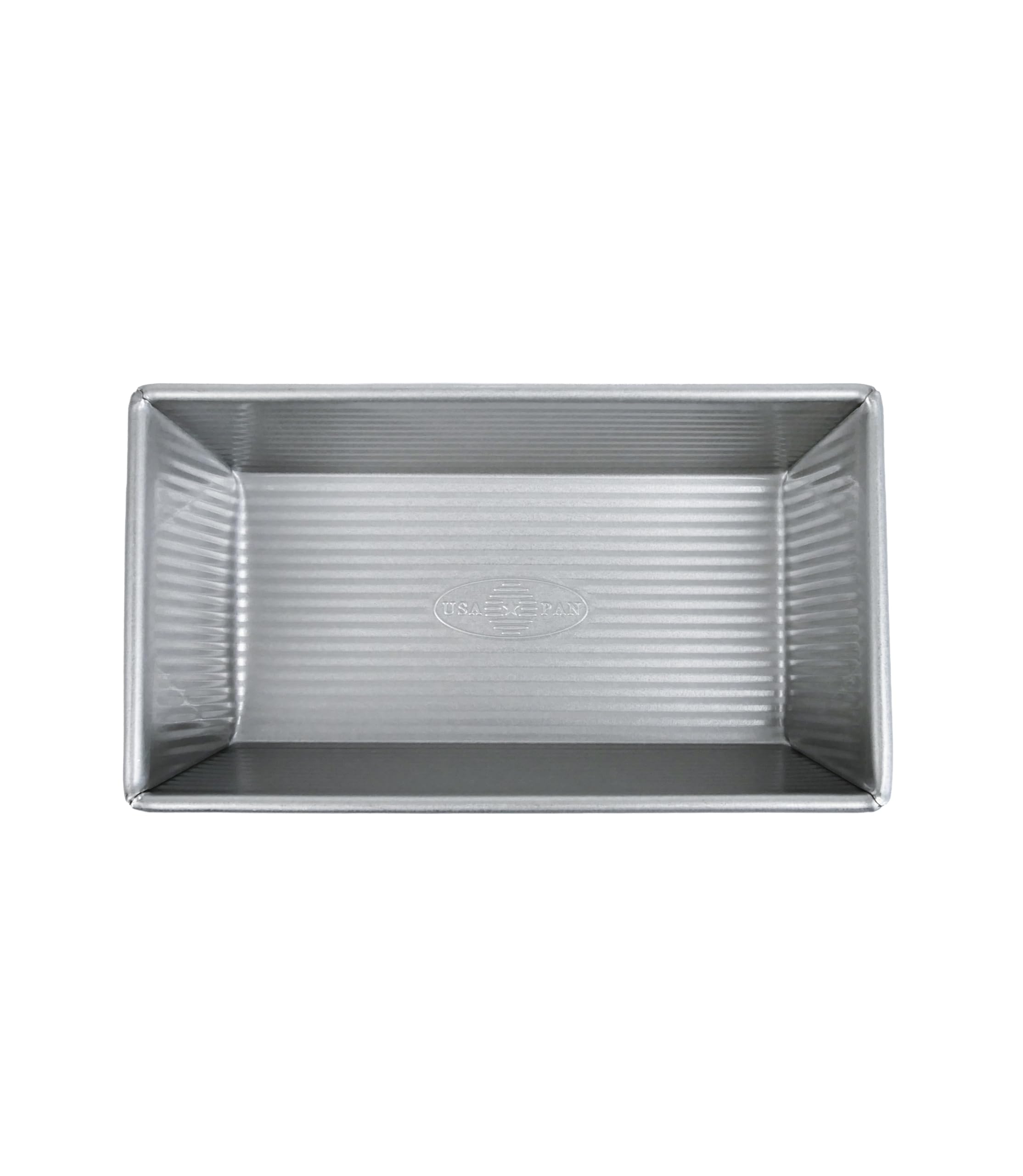
USA Pan Standard Bread Loaf Pan, 1 Pound
Aluminized steel with a corrugated base and a silicone nonstick coating. The baking area is 8.5 by 4.5 by 2.75 inches, the usual size for a one-pound sandwich loaf or quick bread. Made in the USA.
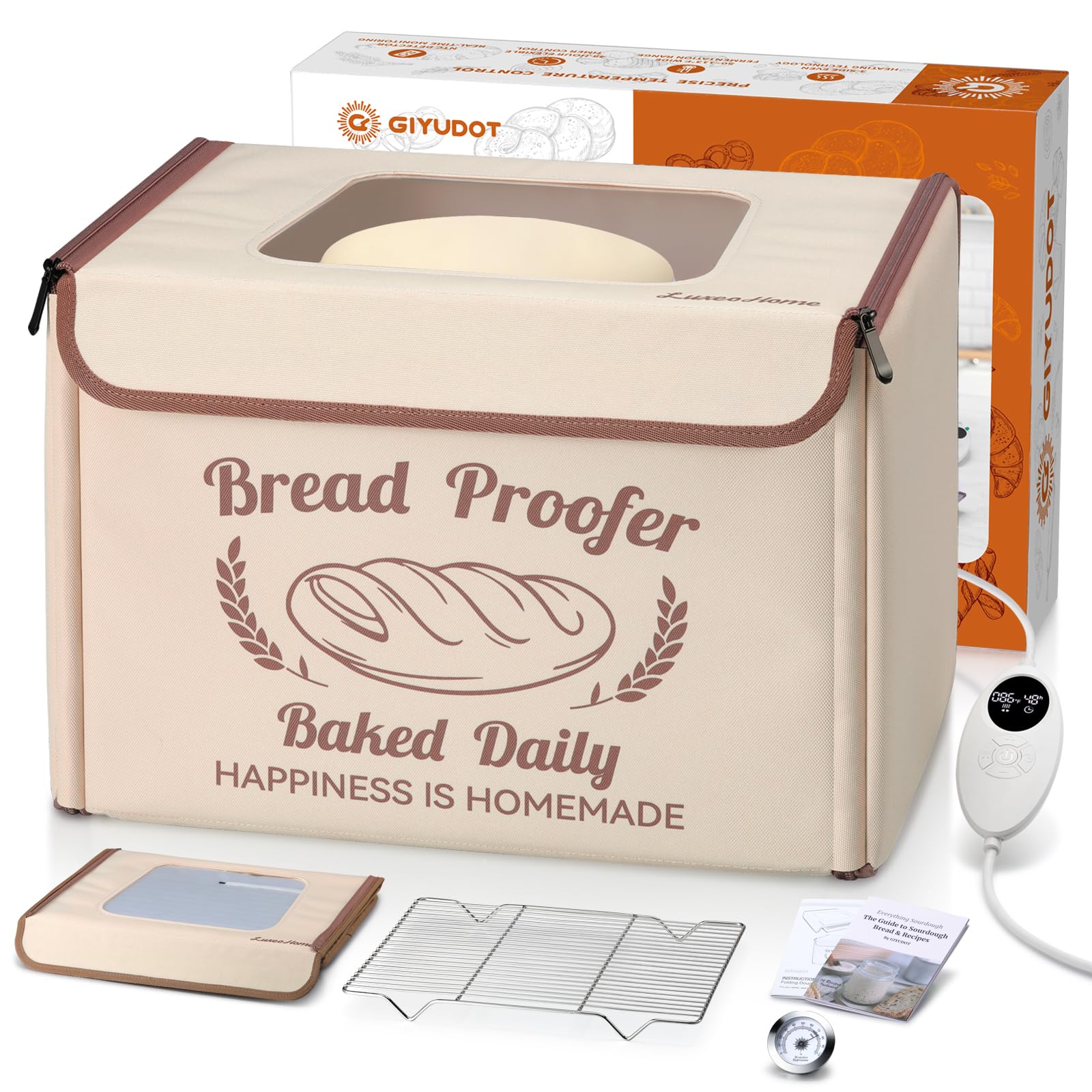
Folding Bread Proofing Box with Temperature Control
A heated box with three heating zones, adjustable from 50 to 113°F, a timer up to 48 hours and automatic shutoff at 131°F. Inside it measures 16 by 12 by 12 inches, and it folds flat when you are done.
Showing 1–12 of 258 results




What tools do you need to start making bread?
For a first sandwich loaf, a mixing bowl, a loaf pan and a kitchen scale. Weighing flour and water instead of using cups is the change that makes recipes come out the same twice, and almost every serious bread recipe is written in grams. A bench scraper comes next, because it lifts sticky dough off the counter better than your hands do.
Sourdough adds a few more: a jar to keep the starter in, a banneton to proof the shaped loaf, a lame to score it and a covered pot to bake it in. You can start with a bowl lined with a floured towel and a sharp knife, and plenty of people do, but these are the tools that make the result more predictable.
Is a sourdough starter kit worth it?
If you have none of the pieces, a kit is usually the cheaper way to get a basket, a jar, a whisk and a lame that fit together. If you already own a good glass jar and a whisk, buying a single banneton and a lame makes more sense. Check what each kit actually includes. Some count the cloth liner and the recipe booklet as pieces, and none of the kits here include flour or a ready-made starter, so you will still need to grow one or get some from a friend.
How do you choose a banneton?
Match the size to your recipe. A 9-inch round basket suits the single-loaf recipes most beginner sourdough guides start with. Oval baskets give a longer loaf that slices more evenly for sandwiches. Rattan absorbs a little moisture from the dough surface, which helps the crust, and the spiral pattern it leaves is the classic look. Use a liner if your dough is very wet or if you do not want the pattern.
Before the first use, dust the basket heavily with rice flour. It sticks less than wheat flour and is the usual fix when dough glues itself to a new basket.
Why bake bread in a Dutch oven?
Steam. For the first part of the bake the loaf needs a humid oven so the crust stays soft while the bread expands. Professional ovens inject steam, home ovens do not, and a preheated covered pot creates the same effect with the water from the dough itself. Then the lid comes off and the crust browns. Cast iron works best because it holds heat well. Check the maximum temperature of the knob on any enameled pot, since some are rated lower than the pot.
Do you need a proofing box?
Only if your kitchen is cold for part of the year. Yeast and sourdough cultures slow down in the cold, so the rising times in a recipe can stretch a lot in winter. An oven with just the light on or a microwave with a mug of hot water does the same job for free, less precisely. A proofing box earns its counter space if you bake every week, or if you keep a starter and want it on a schedule.
What we'd skip
Bread machines if what you want is crusty artisan bread, since they bake a different, softer loaf. Silicone loaf pans, which brown poorly compared with metal. Lame sets with a dozen fancy handles when one handle and spare razor blades do the job. And a proofing box before you have baked a few loaves and know your kitchen is the problem.
We tried to include a classic digital kitchen scale, but it had no buy option on amazon.com when we checked, and the white version of the Lodge pot was unavailable too, so we picked the blue one.
Our pick for a first sourdough is one of the starter kits plus the Dutch oven. For sandwich bread, the loaf pan, the bench scraper and the dough whisk are enough to start.
Related guides
- Must-have gadgets for the home bread baker, our longer article on baking at home.
- Kitchen tools for fermenting at home, for the starter's cousins: yogurt, kefir and pickles.
- Pasta making tools and cheese making kits, two more projects that start with flour or milk.